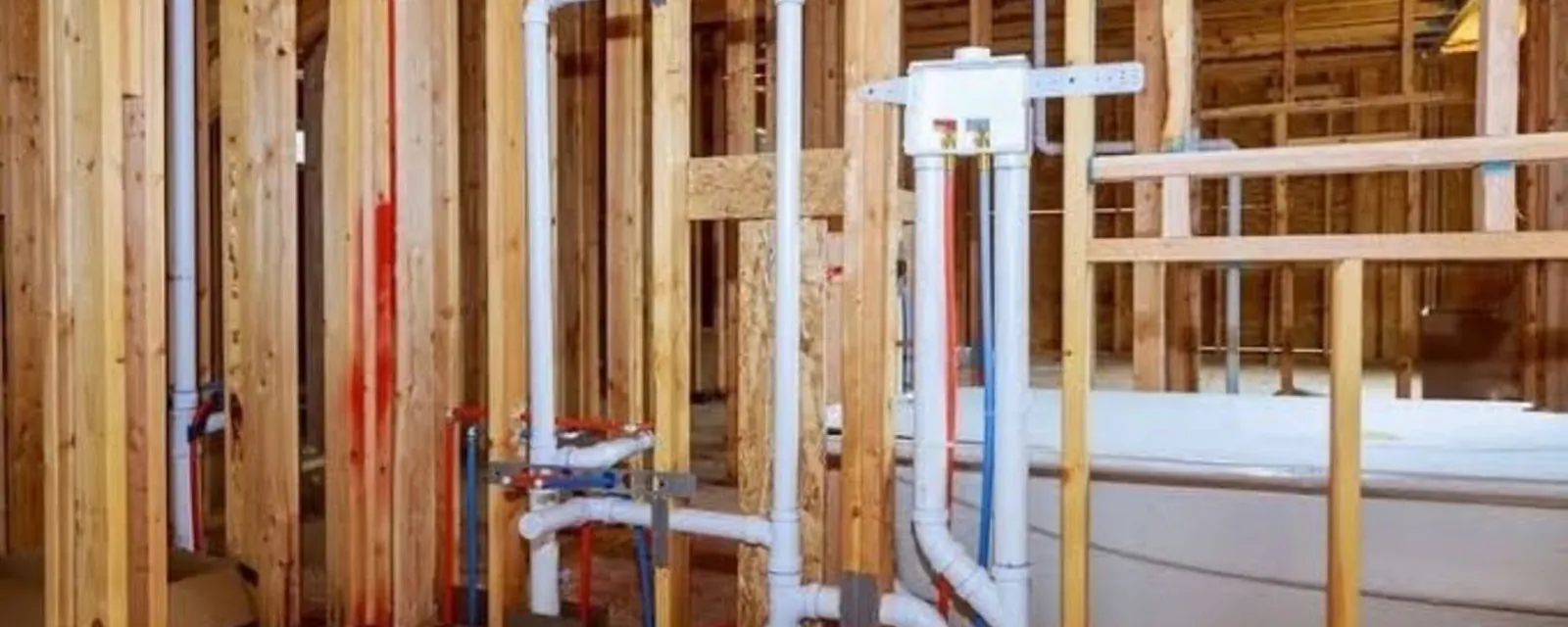
Rough-in is the stage of plumbing that happens before walls are finished. For a laundry area, it means placing the supply valves, the drain and the vent in the right spots, so the washer can connect cleanly later. It is much cheaper to get this right when the framing is open than to fix it afterward.
What a laundry rough-in includes
Hot and cold supply
Two valves, usually in a recessed box in the wall.
Drain standpipe and trap
A vertical pipe that receives the washer hose, with a trap below.
Vent
An air path so the drain flows freely and the trap does not siphon.
Floor drain or pan, if used
Common where a leak would damage finished space below.
Electrical and gas, by others
Dryer power or gas run is a separate trade or a separate line item.
Drain size and trap
Washers move a lot of water quickly. The standpipe is commonly two inches in diameter, with a trap below it, and the top of the standpipe must sit at a height the code allows so water neither siphons out nor overflows. Local codes and inspectors define the exact limits, so we confirm them with the permit.
A washer drain that is too small, set too low or missing its vent is the usual reason laundry drains gurgle, back up or overflow. See our drain cleaning page if you already have a laundry drain that backs up.
Planning a laundry hookup?
Call and tell us where the washer will sit.
Where the washer goes matters
| Location | Plumbing consideration |
|---|---|
| Garage | Often easier to reach drain and supply, and may involve slab cutting. |
| Hall closet | Tight space, so plan access to valves and room for hoses. |
| Second floor | Needs a drain path, a pan and attention to leak risk below. |
| Inside a condo unit | Shared stack, HOA rules and noise limits. |
Moving a laundry location on a slab can mean cutting concrete to run a new drain. On a raised floor, it can mean running the drain through joists. We assess this at the start so you know whether a move is simple or major.
Protecting the space below
A washer on an upper floor can cause serious damage if a hose fails. A drain pan with a line to a safe location and braided stainless hoses reduce the risk. Some owners add a water-shutoff device that closes when it senses a leak. Ask your plumber what fits your layout.
Planning with other trades
If you are remodeling, tell your contractor and plumber early. Cabinet layouts, electrical outlets and the dryer vent route all interact with the plumbing. Our plumbing installation page describes how we coordinate rough-in before walls close and trim-out afterward.
A walk-through of the rough-in steps
Set the box
Frame and mount the valve box at a height that lets hoses hang without kinking.
Run the supply
Bring hot and cold lines to the valves with shutoffs that you can reach.
Build the drain
Install the standpipe and trap at the correct height, sloped to the branch drain.
Add the vent
Connect the vent so air can follow water down the drain.
Test before close-in
Pressure-test the supply and fill-test the drain before walls are covered.
Common mistakes that cause trouble later
- A standpipe that sits too low, so water spills over the top during the pump-out.
- A trap placed too far below the standpipe, which can siphon dry.
- A missing vent, which makes the drain gurgle and can pull water out of the trap.
- Supply valves hidden behind the washer with no access panel.
- No pan or drain under an upstairs washer.
Choosing a valve box and hoses
A recessed box with quarter-turn valves keeps the washer close to the wall and makes it easy to shut the water off when you leave for a trip. Some boxes include a drain connection, which simplifies the layout. Pick one with metal valves and replace rubber hoses with braided stainless ones when the washer is installed.
If you are building a combined laundry and utility area, think about a utility sink next to the washer. A sink is handy for hand-washing, and it needs its own drain and vent, which are easy to add at rough-in and costly afterward.
Dryer and venting are part of the plan
A dryer is not a plumbing item, but it shares the space. A gas dryer needs a gas line with a shutoff, and every dryer needs a vent to the outside with a short, smooth run. Lint in a long, crimped vent is a fire risk, so plan the vent route when you plan the washer.
Tell your plumber if you want a gas dryer, because a gas line run is easiest during rough-in. Electrical work is a separate trade, and the panel needs capacity for a dryer circuit.
Laundry hookups in older homes
In older houses, a washer hookup may share a drain with a kitchen sink or a bathroom. The shared line may be small, partly scaled and slow. A new, high-efficiency washer pumps water out quickly, and an old drain can overflow. If your washer drain backs up, our drain cleaning page explains how to find out whether the line needs cleaning or enlarging before you replace the machine.
Laundry rough-ins in Monterey Park homes
Many Monterey Park homes have their laundry in a garage or back porch, where the supply and drain were added after the house was built. Adding or moving a laundry hookup generally needs a plumbing permit and inspection, and the City's building department decides what applies to your project.
In condominiums and townhomes, including newer buildings along Atlantic Boulevard, an HOA may restrict where a washer can go and what hours work is allowed. Ask your association before you plan the rough-in. The City of Monterey Park's water is supplied mostly from local wells, and its 2010 report listed total hardness around 12 grains per gallon, so mineral scale may collect in washer inlet screens. Cleaning them now and then is a simple task.
Questions about laundry plumbing in Monterey Park
Yes. Without one, the trap can siphon and the drain may gurgle or back up.
Often, depending on the slab or floor, the drain path and building rules.
Adding or moving plumbing generally does. Ask the City of Monterey Park building department.
Commonly two inches, but confirm local requirements with the inspector.
On upper floors or above finished space, a pan is a smart precaution.
Sources and where to confirm
Local facts and rules on this page rest on the City's 2010 water quality report, the building department and the California Plumbing Code. Confirm anything that affects your own property with the source.
- City of Monterey Park Water Division, water quality report (2010 edition cited here). Ask the Water Division for the current report.
- City of Monterey Park building department, plumbing permit requirements, including water heater replacement.
- California Plumbing Code (the state's adoption of the Uniform Plumbing Code, UPC), enforced locally by each city's building department.